How Can Businesses Overcome Common USA–Nigeria International Shipping Challenges?
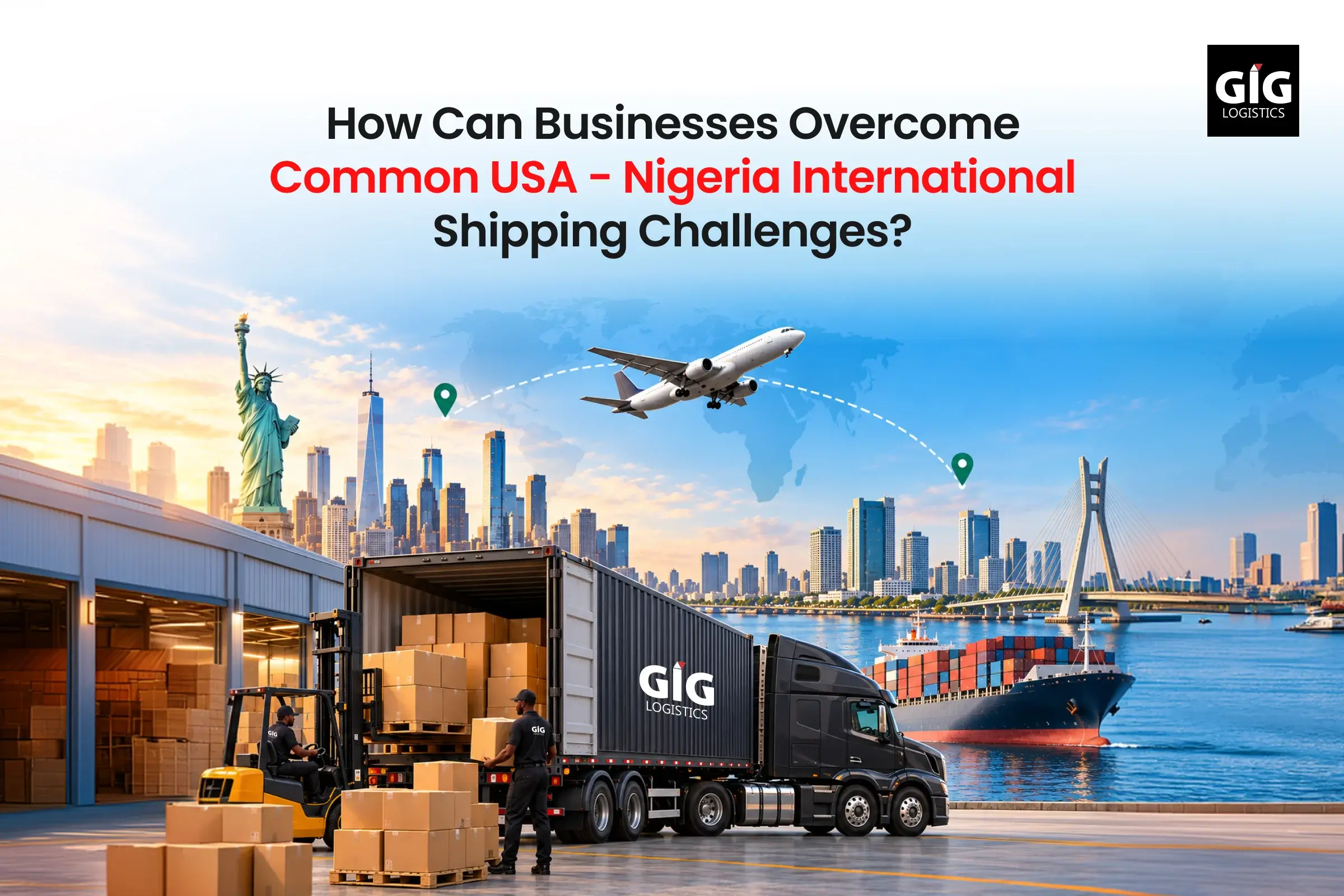
International trade between the USA and Nigeria brings possibilities to expand the market, obtain goods, and develop reliable business partnerships. However, such transactions may get complex because of customs problems, high expenses for delivery, inaccurate documentation, shipment problems, and import restrictions.
Understanding USA-to-Nigeria shipping challenges will help to make the right decision, minimize possible expenses and risks associated with transportation. If all the needed measures are taken and documentation is made properly, the delivery process becomes much simpler and cost-efficient.
This article will focus on the problems that are inherent to USA-Nigeria shipments and ways to solve them.
How Can Businesses Ship Goods From the USA to Nigeria?
Organizing international shipping from the USA to Nigeria can be done by choosing air or sea freight, using express delivery service or consolidation services, depending on the cargo type, shipment terms, weight, and cost of transportation.
Air freight is advisable for time-sensitive, valuable, or light cargo, whereas sea freight is the most cost-effective method for large consignments of commercial cargo. The express delivery service is convenient for sending smaller consignments of goods.
To arrange a shipment successfully, businesses need to:
- Choose the right transportation mode.
- Ensure that Nigerian law permits the cargo to be imported.
- Have commercial invoices, packing lists, and the required permits ready.
- Get quotations involving all the costs involved in the delivery.
- Clear customs duties and arrange the final delivery before shipment.
What Are the Common Challenges When Shipping to Nigeria?
Several USA to Nigeria shipping problems can influence both the delivery timing and the company’s profit. These include poor documentation, hidden charges, customs examination, restricted cargo, congestion at the port, and inability to track the shipment.
Furthermore, businesses also face challenges that Nigerian importers have to deal with because of the difference in laws on cargo classification, declared values, among others.
This includes failure to present certificates, which makes it difficult for the regulated cargo to pass through customs, as well as incorrect invoices, which make cargo undergo extra inspection. There may also be congestion at the port and during the delivery process. The best case scenario would be when all risks are identified prior to transportation of the cargo.
How Can Businesses Reduce the USA to Nigeria Shipping Costs?
Reducing shipping costs from the USA to Nigeria requires considering total transaction costs rather than identifying the most economical method of transportation.
There are various factors that influence shipping costs, including the weight, dimensions, mode of transport, destination point, fuel cost, and insurance. Customs duties, taxes, terminal fees, and last mile delivery may also be considered part of total costs.
Businesses can manage their costs using the following methods:
- Consolidating shipments: Combining shipments to avoid repeated charges.
- Optimizing packages: Avoiding packaging that may result in dimensional weight charges.
- Comparing quotes: Comparing quotes for different modes of transportation.
- Advance scheduling: Scheduling shipments ahead of time where there is flexibility.
- Calculating the landed cost: Calculating the total cost of shipping, customs duties, taxes, and insurance.
Using these strategies will help businesses to make profits and charge accurately for deliveries.
How Can Businesses Avoid Customs Delays in Nigeria?
For proper customs clearance in Nigeria, there is need for proper declaration and the right process of importing the commodity depending on the regulations.
Importing may include commercial invoice, packing list, bill of lading/ airway bill, form M, declaration forms and permits/certificates.
To prevent clearance delays, firms can do the following:
- Proper descriptions and HS codes of the commodities.
- Proper valuation and quantities of the goods.
- Whether SONCAP/NAFDAC or any other clearance process is required.
- Verification of prohibited or restricted items prior to buying.
- Early submission of required documents through the right channel.
- Working with a professional customs clearance agent.
Which is the Best Shipping Method From the USA to Nigeria?
The best shipping method depends on how urgent the delivery is, the quantity and nature of the goods to be shipped, and the available budget.
Air transport is better when delivery is urgent. Sea transport may be suitable for bulk cargo and containerized cargo. Express shipping services may also make shipping smaller goods easier due to their comprehensive tracking systems.
While searching for a door-to-door shipping service from the USA to Nigeria, find out whether the quoted cost of shipment includes cargo pickup, export clearance, customs clearance, import duties, and final delivery. Door-to-door shipping does not necessarily mean that import duties are pre-paid.
How Long Does International Shipping From the USA to Nigeria Take?
Transit time depends on the point of departure, final destination, mode of transportation, customs clearance procedures, and the carrier’s schedule.
Express air shipments may be delivered within several business days, whereas standard air cargo deliveries may take longer because of handling and clearance procedures. Ocean deliveries usually take several weeks, in addition to the time needed for port handling on arrival and inland delivery.
This is just an approximation. The client must seek an estimate of a specific route to distinguish between the transit time and delivery time. To avoid delays when shipping from the USA to Nigeria, prepare all the required documents, obtain all necessary permissions, provide consignee information, and monitor the whole transportation process.
How Can Businesses Choose a Reliable Freight Forwarder for Nigeria?
Professional freight forwarding services from the USA to Nigeria help organize transportation, handling of documents, customs clearance, loading/unloading of goods and other logistics associated with delivery.
It is essential to find out if the company has the experience in delivery of cargoes to Nigeria, licensing, insurance and possibility of delivery within Nigeria prior to making any decisions.
Ask prospective business partners for written quotations, clear delivery terms, tracking options and extra costs. It is important to know what others think about them and get references.
Reliable providers act proactively, inform their customers about all compliance issues and risks prior to delivery of the goods. Their ability to coordinate the whole transaction is as important as their freight quote.
Conclusion
Overcoming international shipping challenges requires proper planning, regulatory awareness, and strong logistics partners. Proper documentation, proper cost calculation, proper transportation mode, and proper clearance are ways that businesses can avoid shipping difficulties and control cost.
With GIG Logistics, companies can get support in addressing international shipping challenges by improving their logistics and shipping operations. With the right logistics partner and the right strategy, international shipping becomes easier and more growth-oriented.
Frequently Asked Questions (FAQs)
Q1. What documents are required to ship commercial goods from the USA to Nigeria?
The type of document will differ based on the type of goods to be transported, however, some of the documents include commercial invoice, packing list, documentation for transportation, customs documentation, and import license.
Q2. How can businesses avoid unexpected shipping charges?
Get a quote that covers all the charges such as freight charges, insurance, customs duties, taxes, handling charges, storage charges, and delivery charges.
Q3. Is air freight better than sea freight for shipping to Nigeria?
In case of urgency or valuable cargo, air transport should be chosen while sea transport can be considered in case of heavy or bulky cargo.
Q4. Why do shipments get delayed during Nigerian customs clearance?
Some reasons may include inadequacy in documentation, wrong declaration, absence of permits, examination, failure to pay duties, and overcrowding in the port.