
GIG Logistics

Our Blogs

How the E-commerce Boom is Changing USA - Nigeria Shipping

How the E-commerce Boom is Changing USA – Nigeria Shipping

E-commerce has changed how people buy products across borders. Customers in Nigeria can now buy clothes, electronics, beauty products, spare parts, and other merchandise from U.S. firms with just a few clicks. This growth has created new opportunities for sellers while also changing how companies approach shipping from the USA to Nigeria. In today’s business environment, basic logistics are not enough; accuracy, speed, flexibility, affordability, and reliability are required. With e-commerce shipping services from the USA to Nigeria on the rise, shipping has become technologically advanced and consumer-oriented. How Does E-commerce Affect Shipping from the USA to Nigeria? The rise of e-commerce has raised the quantity and diversity of packages being transported between the two countries. Rather than transporting large consignments, businesses have moved towards small orders. This shift has made shipping from the USA to Nigeria more complex. This is because the logistics companies have to deal with varying package sizes, product types, delivery locations, among others. Speed has also become important. Online shoppers like to see delivery information for their packages before making a payment, which has caused shippers and logistics companies to invest in tracking technologies and other methods of making shipments faster and easier. For businesses, USA to Nigeria logistics can have a direct effect on customer satisfaction. How Do E-commerce Businesses Ship from the USA to Nigeria? Most e-commerce businesses rely on transportation, customs clearance, fulfillment, and last-mile delivery services. The specific steps depend on the product being shipped, quantity of orders, budget, and delivery requirements. A typical cross-border e-commerce shipping process may include: Accepting the order from the online store. Collecting and packing the order at the U.S. facility. Preparing commercial invoices and other shipping documents. Shipping the item by air or another mode of transport. Completing customs clearance procedures in Nigeria. Moving the order through the local delivery network. Delivering the order to the customer in Nigeria through last-mile delivery. While some sellers opt for third-party logistics companies, others choose to collaborate with international freight services. Companies that desire simplicity in handling their customers may opt for door-to-door shipping from the USA to Nigeria. How Has E-commerce Changed International Shipping? The most important change in the process is that of faster deliveries being carried out in an efficient manner. Traditionally, international logistics had features like bulk shipping of goods and B2B transactions. But, in modern days when e-commerce has entered the market, there is the requirement of individual package delivery and quick transaction processing, package tracking, and customer communication. This has led to innovations in the logistics of e-commerce processes. Technology allows organizations to create labels for shipping, make comparisons on different delivery options, track packages, and prepare documents. Data-driven technology allows for efficient inventory management. This technology allows organizations to place those products which have high demand among Nigerians in a nearer place to their market, or e-commerce fulfillment services in Nigeria can be used to lessen the processing time of orders. Which is the Best Way to Ship E-commerce Orders to Nigeria? There is no one perfect way for all businesses. Each business must select its preferred shipping option considering its products, order volumes, time, destination, and cost factors. Air cargo might be the most optimal way for shipping urgent parcels due to its speed. On the other hand, consolidation can be very helpful for companies wishing to consolidate their shipments into one package and save money. For businesses that deal with many shipments, international e-commerce shipping solutions are of great value. It is also vital to consider not only shipping but the whole shipping process. An urgent international shipment can result in poor customer satisfaction due to its slow delivery locally. How Can E-commerce Businesses Reduce Shipping Costs to Nigeria? Controlling USA to Nigeria shipping costs requires planning.A good starting point is the right packaging. Lighter packages will help to save on shipping fees that depend on weight or volumetric weight charged by carriers. Other practical strategies include: Comparing rates from different carriers for different types of shipments. Combining orders where possible. Strategic location of fulfillment centers. Forecasting inventory more accurately. Documenting products and shipment values properly. Informing customers about duties and other costs before purchase. Monitoring delivery performance. Businesses should also avoid choosing a shipping carrier based solely on the cheapest rates offered. What Are the Challenges of Cross-Border E-commerce in Nigeria? Businesses entering the Nigerian market must manage several operational challenges. Customs regulations, product prohibitions, proper addressing, currency issues, shipment capacity, and local delivery conditions are just some of the things that can affect an order. Customer expectations can be another challenge. Customers expect clear delivery timelines and delivery information, so it’s important to keep them informed about delivery delays. This is why flexible e-commerce delivery solutions in Nigeria are crucial. A logistics partner that can adapt to different shipment sizes, destinations, and other requirements will help online retailers manage the customer experience better, and that flexibility also helps build trust. The Future of USA-Nigeria E-commerce Shipping As the e-commerce world continues to expand, the need for effective USA-Nigeria shipping solutions is growing. With more Nigerians purchasing goods internationally, it is important to have a way to transport those goods using the technologies now available. GIG Logistics and the GIGGo App can help bridge the gap between the U.S. and Nigerian consumers by making it easier to transport goods across borders. This logistics solution gives consumers the ability to track their shipments and enjoy efficient shipping and delivery. For Nigerian consumers, these services provide access to goods sold in other countries, while U.S. sellers gain access to a larger market. Frequently Asked Questions (FAQs) Q1. How does e-commerce affect shipping from the USA to Nigeria? The increasing number of parcels and the necessity of their rapid and efficient handling, real-time tracking, convenient delivery possibilities and customs assistance is one of the major impacts of e-commerce. International shipment is now becoming more personalized. Q2. How do e-commerce organizations ship goods from the USA to Nigeria? These organizations can

Shipping from Dallas to Nigeria logistics planning with GIG Logistics

8 Logistics Planning Mistakes to Avoid When Shipping from Dallas to Nigeria

International shipping might be considered tricky, especially when it comes to sending packages between continents. Many individuals and businesses lose money, face delays, or even lose their consignments because of unnecessary errors. Shipping from Dallas to Nigeria involves more than just scheduling a consignment. International shipments must meet documentation, packing, custom clearance, and many others. The slightest mistake in the process of planning can cost you additional expenses, schedule failures, and other problems. No matter what you are shipping – commercial goods, household things, machinery, or consolidated cargo – effective planning will make your work easier. In this article, we’ll discuss eight planning mistakes in logistics and how to make international shipping easier for you. Plan Smarter, Ship Faster, and Avoid Costly Delays International shipments involve complex logistics procedures that require careful coordination. Even the smallest mistake can cause additional costs which will be unexpected. Knowledge of the common logistics mistakes will help to make wiser decisions to avoid problems during shipment of the cargo. Incomplete or Incorrect Shipping Documents Proper documentation is one of the most important aspects of international shipments. Inaccurate descriptions, absence of invoices, incorrect amounts, or inconsistent shipment values can cause issues during the customs clearance process. Before booking Dallas to Nigeria shipping, ensure that you have all the necessary documents including the commercial invoice, packing list, bill of lading/air waybill, among other certificates/permits. Make sure all details are consistent across all documents. Businesses should also confirm destination requirements before dispatch. Accurate shipping documentation helps Nigeria customs authorities identify the shipment and can reduce unnecessary questions during clearance. Choosing Freight Based Only on Price While it may appear that the lowest quote is the most economical at first sight, this is not always the case since the low quote does not factor in expenses such as handling fees, destination fees, duties, warehouse charges, and delivery fees. When comparing shipping from Dallas to Nigeria cost, you must ensure that you request a detailed quote to be certain about what you are paying for. In cases where the shipping needs to be done urgently, air freight is quicker than sea freight from Dallas to Nigeria. Selecting the Wrong Freight Method Every shipment has different transport needs. Using air freight for heavy, non-urgent cargo can increase costs, while using ocean freight for urgent shipments can slow things down. For urgent documents, samples, electronics, or critical inventory, air shipping to Nigeria from the USA is often the practical option. Larger commercial consignments, on the other hand, tend to benefit more from ocean transportation. Before booking, ask your freight provider to compare shipping transit times, weight limitations, routing, handling costs, and destination services. A professional shipping company from Dallas to Nigeria can help match the freight method to your shipment. Poor Packaging and Cargo Preparation Packaging protects cargo throughout loading, unloading, warehousing, and transporting. Low-quality cartons, inappropriate pallets, inadequate protection, and improper moisture protection may cause cargo damage. Use packaging suited to the nature of the cargo and the mode of transport. Heavy cargo needs sufficient structural protection, while fragile goods should have adequate internal protection. All cargos should be properly labeled and packed. Proper packing is especially important for the cargo shipping from Dallas to Nigeria, when cargo may be handled multiple times during transit. Ignoring Customs Requirements Customs should be considered from the very beginning of the process of transporting goods and not after they have been delivered at their destination place. The requirements of the customs department vary according to the nature of the goods transported. Research customs clearance requirements in Nigeria before shipping. Ensure that your goods comply with all the regulations and do not require any special permits or labels. Working with an experienced customs broker or freight forwarder can also prevent you from documentation issues. Underestimating Transit and Delivery Time Another common mistake is promising delivery dates without considering the complete transportation cycle. Shipping time from Dallas to Nigeria varies depending on the mode of transport, route, schedule of the carrier, clearing customs, type of cargo, and last mile delivery. Instead of basing your shipment strategy on achieving the shortest possible transit time, plan for a buffer in order to account for the shipment of products linked to production schedules, store openings, or customer orders. In looking for information about freight transport from Dallas to Nigeria, request transit times. Failing to Coordinate With the Receiver A shipment can reach Nigeria successfully and still face delays if the consignee is not ready to receive it. Verify the receiver’s contact details, delivery address, operating hours, ID requirements, and customs clearance procedures before shipment. Strong coordination is very important for international shipping from Dallas to Nigeria. The shipper, carrier, freight forwarder, customs representative, and consignee should understand their respective responsibilities. Proper preparation of information and continuous communication during the entire process of shipping cargo are among the most efficient methods of preventing delays. Choosing a Provider Without Checking Its Capabilities Not all logistics providers have the capability of delivering all kinds of international shipments. Before booking your cargo, you need to consider whether the selected logistics provider has experience in Nigeria-bound cargo, types of freight, customs clearance support, tracking, insurance, and delivery of the cargo to the destination. A professional provider who specializes in freight forwarding services from Dallas to Nigeria will coordinate various phases of delivery of cargo. Ask for a quote and find out what will happen to your cargo if it gets delayed, inspected, damaged, and retained in the destination country. If you are shipping from the USA to Nigeria from the USA, evaluate the service along with its cost. A reliable provider should offer clear communication, documented charges, shipment tracking, and defined responsibilities. Plan Your Shipment With GIG Logistics International shipping should begin with the right preparation. Before shipping from Dallas to Nigeria, make sure you go through all your documentation, select the right mode of transportation, ensure proper packaging, know how to clear the customs process and allow enough time for the

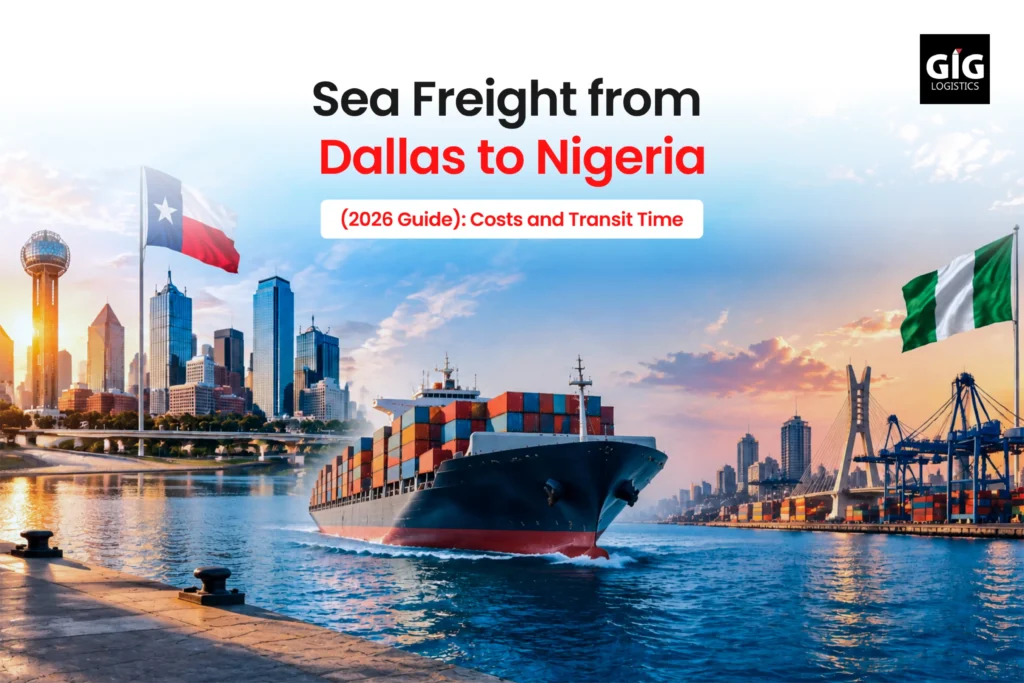
Sea Freight from Dallas to Nigeria (2026 Guide)

Sea Freight from Dallas to Nigeria (2026 Guide): Costs and Transit Time

Planning sea freight from Dallas to Nigeria involves more than comparing ocean freight rates. As Dallas is not a port city, your cargo should be transported by trucking or railway transport to a seaport before loading on the ocean-going vessel. In this guide, GIG Logistics provides information about shipping your cargo from Dallas to Nigeria, its cost, time period, LCL and FCL options, customs regulations, and methods to decrease your freight costs. What is Sea Freight? Sea freight is the transportation of goods by cargo vessel across international waters. It is commonly used for shipments that are too large, heavy, or numerous to move economically by air. This method is ideal for: Large shipments Heavy or bulk cargo Non-urgent deliveries Commercial imports and exports Companies choose sea freight when they want to move goods in bulk at a lower cost. Types of Sea Freight Services The two main sea freight options are Full Container Load (FCL) and Less than Container Load (LCL). The right option depends mainly on the size and volume of your shipment. Full Container Load (FCL) FCL means the container will carry only your shipment without sharing space with other customers’ cargo. FCL is suitable when you: Have a large shipment. Need more safety and privacy. Want faster handling. Less than Container Load (LCL) LCL means your goods share a container with shipments belonging to other customers. LCL is suitable when: Your shipment is small. You want to reduce costs. You do not need a full container. Both FCL as well as LCL can be helpful. It all depends on your shipment volume, budget, cargo type, delivery requirements, and destination. How much does it cost to ship from Dallas to Nigeria? The short answer is that it depends on your cargo, container size, route, and delivery service. For Dallas-to-Nigeria shipping costs, it is important to distinguish ocean freight cost and cost of inland transport and destination. Small LCL shipment can cost you hundreds and thousands of dollars, while a full container will be a bit more expensive. Your final shipping cost from the USA to Nigeria may include: Dallas pickup and transportation to the port Export documentation and handling Terminal handling charges Customs clearance Duties and taxes Cargo insurance Destination transportation Storage or demurrage, if applicable Therefore, when someone asks, “How much does it cost to ship from the USA to Nigeria?”, the correct answer requires shipment-specific information. How long does sea freight from Dallas to Nigeria take? The Dallas to Nigeria shipping period may last between 5 and 9 weeks on average, depending on the shipping route and services used. Port-to-port ocean transit may be shorter. For example, the time taken for shipment by sea from Dallas to Lagos is approximately 31 days on the Dallas-Galveston-Apapa route and 21-35 days for the Houston-based Texas service. What documents are required to ship to Nigeria? For commercial cargo shipping from the USA to Nigeria, documentation depends on the goods and importer. Typical documents include a commercial invoice or proforma invoice, packing list, bill of lading, insurance documents, certificate of origin if needed, and other regulatory certificates depending on the product. The Nigeria Customs Service’s current standards identify documents including a registered Form M, applicable regulatory certificates, bill of lading or air waybill, commercial invoice, packing list, and certificate of origin for the PAAR process. Certain products will require other documents for compliance; for instance, there is a requirement for SONCAP certification for certain products, and the Standards Organisation of Nigeria states that the relevant Product Certificate and SONCAP Certificate are required for the applicable import and customs-clearance processes. Importers should therefore confirm the requirements applicable to their specific products before shipping. How much does it cost to ship a container from the USA to Nigeria? The price of container shipping from the USA to Nigeria varies constantly. Rather than relying on a generic 2026 container price, ask your freight forwarder to clarify whether the quotation includes: Inland pick-up Export clearance Ocean freight Terminal charges Destination handling Customs brokerage Duties and taxes Final delivery An inexpensive freight quote can become expensive if these charges appear separately. Does Sea Freight from the USA to Nigeria include customs? Usually, standard shipping charges for transporting goods via ocean from the USA to Nigeria usually do not cover the custom duties, taxes, and final delivery within Nigeria. With door-to-door shipping from the USA to Nigeria, the forwarder can assist in loading, ocean transport, customs clearance, and delivering of the consignment. However, always review the quotation and agreed shipping terms to determine exactly which services and charges are included. How to Ship Commercial Goods from Dallas to Nigeria Transporting commercial cargo from Dallas to Nigeria requires a step-by-step process: First of all, you will need to obtain all necessary information related to your cargo in terms of the name of the item, its weight, volume, declared value, quantity, and destination address in Nigeria. Proper information will enable the freight forwarder to know which means of transport is appropriate for you. Ensure that your cargo is eligible for importation into Nigeria and find out any licences, certificates, or permits requirements that apply to them. Look up information on shipping through LCL and FCL services from a reputable freight forwarding agency or shipping companies moving cargo from Dallas to Nigeria. Get a detailed quotation and ask them to present all costs related to each of the transportation stages: origin, ocean shipment, destination, customs clearance, and other necessary documentation. Find out about the transit time, possibility of transshipment, insurance, tracking, customs clearance, and extra charges. How can you reduce shipping costs? For shipping from Texas to Nigeria, consolidating compatible goods can help reduce the cost of moving multiple smaller shipments separately. Accurate cargo dimensions and weight are also important because incorrect information can result in revised charges. Selecting the right size for the container, comparing different ways and methods, and booking in advance will also assist you in controlling your expenses. When choosing the best shipping