
GIG Logistics

Our Blogs

freight forwarder USA to Nigeria

7 Red Flags to Watch for When Choosing a USA-to-Nigeria Freight Forwarding Company

Choosing the right freight forwarder can make international shipping convenient, efficient and more reliable. However, selecting the wrong freight forwarder may cost you hidden fees, delayed shipments, poor communication, and even delivery problems. That applies not only to personal but also commercial shipments. When comparing several freight forwarding companies that ship from the USA to Nigeria, it is important to consider more than the price of the service itself. A trusted freight forwarding company should be characterized by transparent pricing, communication, shipment tracking, relevant experience, certification, and good customer service. In this article, we have compiled seven red flags to watch out for when choosing a freight forwarding company. Hidden Fees and Unclear Shipping Costs An attractive initial quote may seem good and cheap, it might not be an indication of how much it will actually cost you to ship your goods. Sometimes, the company might start off by quoting you low but then end up adding charges for various things such as documentation, customs clearance, handling and storage, port charges, fuel surcharges, etc. Before booking shipping to Nigeria from the USA, ask for a complete quotation that clearly explains what is included in the cost and what is not. For instance, in assessing the quotation for shipping cargo from the USA to Nigeria, find out whether customs charges, destination handling, insurance, and delivery are included in the quoted price. Red Flag: The company does not provide a written quotation or introduces additional charges after you have made commitments to its services. Poor or Slow Communication International transport involves several processes including pick-up, transit, customs clearance, delivery and drop-off of the cargo. Communication plays an important part where there is anything happening in transit. An efficient shipping company will provide you with proper advice, realistic schedule and updates. It is important for you to have an idea of who you should contact in case of any delay in your freight transportation, if your documents need to be changed or customs require additional information. Furthermore, it is important to learn how the transportation companies communicate with their clients and how they answer questions regarding your shipment. Red Flag: The company does not respond to emails or phone calls promptly, or provides vague answers instead of clearly explaining the next steps. No Reliable Shipment Tracking from the USA to Nigeria Visibility makes sure you know where your shipment is and whether it is on schedule. If the company does not offer visibility, there will be no way for you to know anything about your cargo’s location or its status. Tracking becomes particularly valuable for cargo shipping from the USA to Nigeria, when there are different transportation stages. Depending on the kind of service, you will have to get updates from pickup until delivery via departure and arrival, as well as customs clearance. An experienced freight forwarder must tell you all about the working principles of its tracking system and about the information concerning the shipment you will receive. Red Flag: The company cannot provide a tracking number, manual updates; or clear information about the current status of your shipment. Limited Experience With Nigeria Shipments International freight forwarding is more than just planning the transport of the cargo, as the destination-country regulations, customs clearance, documentation, ports, carriers, and logistics network may have an impact on the shipment. When considering how to choose a freight forwarder from the USA to Nigeria, one should consider whether the forwarder has any experience handling shipments to Nigeria. The experience of the forwarder in handling cargoes to Nigeria can facilitate the shipping process significantly. Moreover, experience can help to choose between air and sea freight from the USA to Nigeria. While sea freight can be used for large shipments which are not urgent, air freight should be considered in case of urgent shipments. Red Flag: The forwarder cannot give a clear explanation about the shipping process to Nigeria or does not have any experience in handling shipments to the destination-country. Read Also: How Freight Forwarders Help Businesses Reduce International Shipping Costs Missing Certifications, Licenses, or Industry Credentials Credentials can offer an important additional element of assurance when comparing an international freight forwarding company. Depending on the services provided, the freight forwarder may require relevant registrations, licenses, affiliations, or partnerships. Do not rely solely on a logo or claims displayed on a website. Ask the company to justify its credentials and confirm any claims where possible. You should also establish whether the company deals with known carriers and customs professionals. A reputable company will have no problem giving answers to your questions regarding its operating standards. Red Flag: The company refuses to provide basic business or credential information, makes unsupported assertions, or cannot identify its customs and transportation partners. Weak Customer Support After Booking Customer service should not disappear once payment is made. International shipping sometimes leads to some unforeseen problems which makes it necessary for you to require help during the whole shipping process. Prior to making your decision regarding door-to-door shipping from the USA to Nigeria, you need to inquire how the logistics company handles any unforeseen situations like delayed delivery of your goods, damaged items, custom questions, address changes etc. Red Flag: The company is responsive before you make payment but becomes hard to reach after your shipment goes through. Unreliable Delivery Records or Unrealistic Promises A freight forwarder’s delivery performance can provide useful insight into its reliability. Be cautious if a company promises extremely fast delivery without explaining how it can achieve the stated timeline, especially when several factors can affect international shipments. If you are asking how long shipping from the USA to Nigeria takes, keep in mind that the time period may depend on the shipping method used, place of departure and arrival, customs clearance, carrier’s schedule, cargo type, and seasonal conditions. Look for realistic service commitments, reasonable delivery estimates, and information about successful deliveries. Customer feedback is valuable, but it should be considered alongside other factors rather than used as the
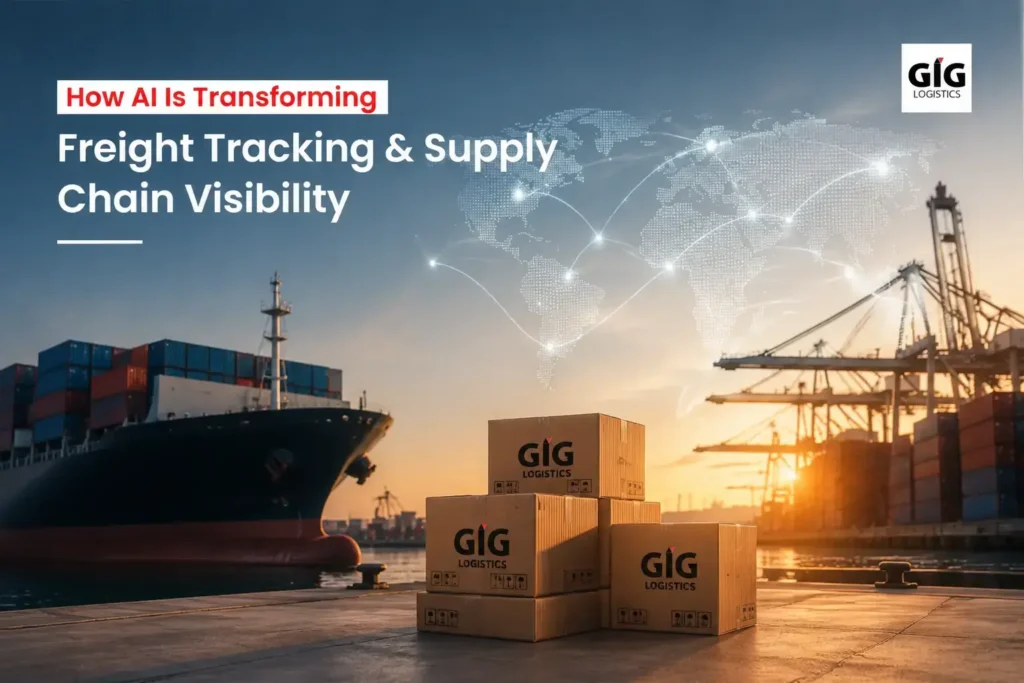

AI freight tracking for shipping from USA to Nigeria

How AI Is Transforming Freight Tracking & Supply Chain Visibility

The freight transportation involves an enormous amount of carriers, storage facilities, ports, customs and delivery points. Consequently, logistics specialists should have reliable information about each cargo at every stage of its transportation. Unfortunately, usual logistics tracking systems give little information, which means that teams should use different sources for receiving relevant data. Nowadays, the use of AI in the logistics industry starts changing this state of things. With the help of real-time data on shipments and prediction technology, tracking shipments is simplified. It helps in predicting the time of arrival of goods, recognizing problems that may arise, selecting the route and fast decision making in logistics. What Is AI-Powered Freight Tracking? The AI-based freight tracking in logistics incorporates technologies like machine learning, prediction, automation, and real-time data. In contrast to the conventional methods of freight tracking, the AI not only traces the location of shipments but also predicts future events. For instance, an AI system is able to analyze past delivery data, traffic, weather, and carrier performance and make predictions based on the analysis results. Key Benefits of Using AI in Supply Chain Management AI brings greater efficiency to supply chains in all areas – from buying to last-mile delivery. It can help improve real-time shipment tracking using data obtained from GPS devices, telematics technology, carriers, IoT, and transportation management systems. Key benefits include: Automation of routine processes: The use of artificial intelligence minimizes manual effort, minimizes errors and costs by automating order processing and shipment planning processes. Predictive forecasting and risk management: Machine learning helps anticipate demand changes and potential risks before they arise. Improved logistics accuracy: Real-time shipment tracking and route optimization enables faster delivery and greater customer satisfaction. All these factors contribute to increased agility and efficiency in the global supply chain. How AI Improves Supply Chain Visibility AI technology not only allows monitoring of individual shipments but also provides an analysis of interrelations between transportation, inventory, warehousing, procurement, and fulfillment processes. This creates a broader view of supply chain operations. This makes it possible to detect bottlenecks, monitor transport efficiency, and see the effect of disruptions on the rest of the process. Moreover, the application of AI technologies in supply chain management can facilitate the discovery of patterns that are hard to notice by humans. For instance, based on previous data analysis, the system can detect repeated instances of delays caused by a particular route, carrier, season or port. Predictive systems take this further by helping manage risk. When there is detection of any factor that can impact the delivery of freight, early warning alerts can be raised, thus providing enough time to think about alternate means. Practical Applications of AI in Supply Chain Visibility The role of AI technologies in improving supply chain visibility is multifaceted in nature. The following is an explanation of how AI adds value to supply chain visibility. Inventory Optimization and Demand Forecasting AI solutions analyze sales data, seasonal patterns, and consumer behavior to keep appropriate levels of inventory. Machine learning algorithms incorporate economic data and social media data to improve demand sensing and reduce the risk of overstocking or understocking. Routing and Logistics Optimization AI factors in traffic, weather, and telematics data to generate dynamic routing solutions for logistics providers. This reduces transit delays, fuel costs, and carbon emissions while improving delivery efficiency. Dynamic routing is especially helpful in international logistics services where transportation routes often involve multiple providers, borders, and ports. Supplier Performance Monitoring and Risk Assessment AI constantly monitors the health of suppliers with the use of both direct data (e.g., on-time deliveries, quality checks) and indirect data (e.g., litigation, shipping inconsistencies). In industries like automotive manufacturing, this allows detecting anomalies in suppliers’ work and managing risks. Warehouse Automation and Quality Control AI-powered robotics and vision systems make warehouse operations more efficient, while AI-driven quality control helps detect product defects directly on production lines. AI in International Shipping International logistics entails cooperation amongst different countries, carriers, customs agents, freight forwarders, and other logistics service providers. Therefore, visibility becomes hard if shipment details are stored in different unconnected systems. For businesses shipping from the USA to Nigeria, AI-driven services can aid in consolidating shipment data and increasing visibility throughout the entire process of transportation. Although AI cannot solve any problems of this kind, it can assist in spotting them before time. What Businesses Should Consider Before Adopting AI While AI technology provides many opportunities, it is crucial to evaluate one’s technology environment prior to implementation of a solution. First of all, there is the problem of data quality since poor-quality data may lead to incorrect outcomes provided by the AI system. Secondly, the system has to be compatible with transport management, warehousing, ERP, and carrier systems. Beyond that, companies need to think about data security, visibility, scalability, and human intervention. AI technology has to assist competent logistics managers, and not work independent of them. Traditional vs. AI-Powered Freight Tracking: What’s the Difference? The shift from conventional cargo monitoring to AI-based approaches gives logistics professionals new tools for managing shipments and responding to disruptions. Unlike traditional tracking, which typically just reports shipment status, AI-powered tracking does much more. Traditional Freight Tracking AI-Powered Freight Tracking Shows the shipment’s current location and status Predicts potential delays and shipment outcomes Relies more on manual monitoring Automates tracking, monitoring, and alerts Provides scheduled or static ETA updates Continuously recalculates ETAs using real-time data Responds to disruptions after they occur Identifies potential disruptions before they escalate Data may remain scattered across different systems Integrates data from multiple sources for greater visibility Offers limited predictive insights Uses predictive analytics to support faster decisions Primarily tracks where a shipment is Helps explain what is happening and what may happen next AI ensures that freight tracking evolves beyond being just a method of confirming the delivery status; it turns into an intelligent tool that helps foresee disruptions and make decisions. The Future of AI in Freight Tracking Artificial Intelligence has transformed the field of logistics by becoming

The Future of Last-Mile Delivery: Key Trends, Innovations, & Autonomous Solutions

The Future of Last-Mile Delivery: Key Trends, Innovations, & Autonomous Solutions

Last mile deliveries have become more digitized, agile, automated, and based on data. Businesses are implementing the use of AI technologies, real-time tracking, delivery optimization, smart lockers, and other alternative modes of deliveries in order to be more efficient and to provide customers with flexibility in terms of receiving their orders. However, companies still have to address high costs of delivery, traffic problems, complexities of last mile delivery, and sustainability issues. The future of last-mile delivery will be shaped by AI-based route optimization, real-time tracking, autonomous deliveries, smart lockers, electric vehicles, and other data-based logistics technologies. These innovations can help to lower delivery complexity for firms and provide customers with more convenient delivery services. In this blog post, we’ll look closer into the major trends that define last-mile logistics, how AI is improving delivery operations, the importance of autonomous delivery solutions, and many more. How Is Last-Mile Delivery Changing? Last-mile delivery refers to the final stage of the logistics process that involves moving the product from the warehouse or fulfillment center to its final destination. While this might appear like just a fraction of the entire logistics process, last mile delivery, including those operating between the USA and Nigeria, plays an important role in affecting the cost of delivery and customer satisfaction. Nowadays, customers not only want a delivery but they want delivery updates, pick-up times, shipment tracking, and even the option to redirect deliveries to an alternative location. The Future of Last-Mile Delivery: Trends to Know The last mile delivery industry is experiencing transformation as companies keep investing in advanced technology to provide services in an efficient, flexible, and reliable way. Some of the developing trends within this sector include: AI-based logistics: Through artificial intelligence, companies will be able to predict demand and generate optimized routes while anticipating any potential delays to deliveries. Autonomous delivery: Robots, drones, and autonomous vehicles are being considered by firms in making some deliveries. Secure lockers: Secure locker systems will provide flexibility for customers and eliminate redundancies in deliveries. Sustainable Transportation: Sustainable modes of transport such as electric cars, better routing of delivery trucks, and consolidated deliveries can decrease unnecessary journeys. Real-time visibility: GPS tracking and automated alerts allow customers and firms to have clear visibility about deliveries. How AI Is Changing Last-Mile Delivery AI is becoming one of the necessary components of logistics in modern times. The use of AI in logistics enables the analysis of a lot of data such as location of orders, traffic, schedules, availability of vehicles, and past data about deliveries. Therefore, companies can make use of AI in order to plan their routes, forecast the demand for deliveries, allocate resources, and detect any potential issues that may arise in regard to delivering goods. AI can facilitate communication with customers. Automated solutions can notify customers about delivery status and potential issues, and help answer common customer questions. However, companies should apply AI with human supervision to verify crucial decisions. How Does Route Optimization Improve Delivery Efficiency? Route optimization is another major advancement in last-mile delivery technology. While traditional route optimization can be done according to the schedule or human choice, a contemporary solution considers traffic conditions, delivery points, capacity of vehicles, time windows, and availability of drivers. This makes optimized routing an effective way for companies to build realistic schedules and avoid unnecessary detours. Dynamic routing takes this a step further, allowing companies to adjust routes in real time as conditions change. For businesses operating in complex urban markets, such capability can prove to be quite useful. For markets characterized by complicated traffic, unclear addresses, or a high density of deliveries, the deployment of digital maps, GPS, and dynamic routing will make the process of coordinating deliveries much simpler. How Autonomous Technology Is Reshaping Last-Mile Delivery Autonomous delivery involves the use of drones, robots, and autonomous vehicles in delivering selected items with little or no human intervention at all. These will most probably supplement existing delivery networks, rather than completely replace traditional delivery networks. For example, delivery robots can be very effective in closed environments such as college campuses, residential neighborhoods, or business parks. Likewise, drones can deliver packages within the framework of legal standards. Taking into consideration the development in the field of autonomous technology, organizations need to consider issues related to safety, efficiency, cost, regulations, and consumer preferences when implementing autonomous delivery methods. How Are Smart Lockers Transforming Last-Mile Delivery? Smart lockers provide yet another practical solution to modern-day delivery problems. Rather than delivering each package straight to a customer’s house, logistics providers can put the package in one of their smart lockers. Customers can later retrieve their purchase at their convenience. This helps companies avoid repeated delivery attempts and gives customers greater flexibility. Smart lockers function especially efficiently in urban locations where there is a concentration of deliveries from many points of proximity, and they may be used to complement home delivery by giving customers more freedom in how they receive their shipments. What Are the Benefits of Last-Mile Delivery Technology? The use of advanced technology in last-mile delivery ensures that there are efficient processes of delivery to enable better service delivery to clients. Using technologies such as artificial intelligence in route planning and tracking helps an organization become visible and responsive to the delivery situation. Key benefits include: More efficient routes: Efficient routes could mean that you avoid unnecessary trips and maximize vehicle usage. Increased shipment visibility: It enables one to track shipment for easier identification of where your package is. Reduced operational cost: Route optimization minimizes fuel cost and fewer delays. Enhanced customer satisfaction: Timely data, consistent delivery times, and flexible pickup services increase convenience and trust. What Will the Future of Last-Mile Delivery Look Like? The future of last-mile delivery will be highly connected but not automated. The use of artificial intelligence will allow businesses to forecast their demand and make their business processes efficient, while technologies like real-time tracking, smart locker stations, electric and autonomous deliveries will ensure flexibility during the

How E-commerce is Shaping the Future of Logistics in Nigeria

How E-commerce is Shaping the Future of Logistics in Nigeria

The e-commerce revolution is changing the face of Nigeria’s logistics sector by driving demand for quick delivery, order processing, tracking, inventory management, and last-mile logistics. With growing numbers of online shoppers, the logistics companies operating in the country are becoming increasingly dependent on technology. From warehouse expansion and digital order management to route optimization and last-mile delivery, technology is transforming logistics operations nationwide. In this blog post, we’ll delve into how e-commerce is reshaping logistics in Nigeria, the technologies driving that change, and what businesses can expect from the future of e-commerce logistics. What is E-commerce Logistics? E-commerce logistics is the process of stocking, handling, transporting, tracking, and delivering products purchased online, from order fulfillment through final-mile delivery. How E-commerce Increases Logistics Demand With the development of e-commerce, the relationship between e-commerce and logistics has become increasingly relevant, because efficient fulfillment and delivery have now become inevitable for any company. Each transaction conducted via e-commerce website includes several stages: order confirmation, stock management, picking, packing, shipping and delivery; the last stage is particularly challenging when talking about international shipping from the USA to Nigeria. With an increase in the order volume, companies have to streamline their processes so as to cater to their customers’ demands for convenience, quick deliveries, and order tracking. Efficient logistics enables e-commerce firms to deliver products on time, be satisfied by their customers, handle increasing order volumes, and also gain more customers. How is E-commerce Delivery Changing in Nigeria? Delivery speed and flexibility have become critical considerations in online shopping. Businesses need efficient means to move orders from fulfillment centers to customers across different locations. This trend has led to new delivery methods being implemented by businesses depending on the needs of the customer, product, and destination. Such delivery models will include scheduled deliveries, same-day delivery, pick-up locations, and regular delivery. This trend will also create opportunities for specialized e-commerce delivery services in Nigeria where third-party logistics companies deliver products on behalf of businesses without delivery systems. How is E-commerce Changing Warehousing and Fulfillment in Nigeria? E-commerce has brought about changes in the process through which inventory is handled and managed. Traditional inventory storage methods often can’t keep pace with the speed and efficiency required to deal with growing order volumes. As a result, e-commerce fulfillment is becoming more significant in Nigeria, particularly for businesses that deal with international orders. This allows businesses to manage cross-border deliveries, such as shipping of goods from the USA to Lagos, Nigeria. Such modern operations are able to incorporate inventory storage, picking, packing, logistics, customs clearance, and even delivery. Strategically located warehouses and fulfillment centers allow businesses to bring their goods near their consumers by providing efficient and fast delivery. As a result of increased online shopping, fulfillment centers are becoming more technologically-oriented through the use of inventory management software, barcode scanning, alerts, and online order management. How is Technology Transforming Logistics in Nigeria? Technology is one of the key drivers of change in Nigeria’s logistics sector, connecting retailers, warehouses, deliveries, logistics service providers, and consumers through a central platform. The impact of technology on logistics in Nigeria can be seen in developments such as: Real-time shipment tracking Automated order processing Route optimization Digital inventory management Electronic proof of delivery Automated customer notifications Real-time delivery updates Data analytics can assist businesses in improving their processes through examining delivery times, orders, customers’ location, and transportation efficiency. For businesses trying to find scalable logistics solutions for e-commerce, leverage technology will help them gain more insight into operations and communicate better with customers. Why Is Last-Mile Delivery a Challenge in Nigeria? Last-mile delivery is normally the most difficult part in the logistics process. Last-mile delivery in Nigeria refers to delivering individual shipments from warehouses, distribution centers, or hubs to the destination point – the client’s address. Several factors can impact delivery, such as traffic congestion, road conditions, address accuracy, population density, and customer availability. That is why a business needs to have a strategy regarding route planning, scheduling and coordination with the client. For instance, an online store can plan its routes by analyzing customers’ location and allocation of the closest delivery hubs to the customer. Strategies like route optimization, distribution hubs, client information, digital tracking, and alternative delivery solutions, allow the company to avoid any unnecessary miles. How Is Cross-Border E-commerce Creating Logistics Opportunities? The emergence of online business has created a lot of possibilities both locally and internationally. Cross-border e-commerce helps local businesses to reach overseas customers while also allowing Nigerians to access products from other parts of the world. However, international e-commerce involves a number of logistic issues. Companies will be required to sort out issues of custom clearance, international shipping, taxes, delivery and returns. This creates a need for specialized shipping services that account for logistics requirements both within and outside the country. Shipping services from Nigeria to the USA help e-commerce businesses manage cross-border deliveries, streamline customs and transportation, and expand into international markets. What Is the Future of E-commerce Logistics in Nigeria? The future of e-commerce logistics in Nigeria will increasingly be dependent on digital connectivity, efficient fulfillment service providers, tracking capability and data analytics of the transportation process. Artificial intelligence, predictive analysis, inventory management, and route optimization will allow logistics companies to forecast demand better and optimize inventory management and logistics. However, the objective is not only to deliver the product faster but to create an interconnected logistics system, where orders, inventories, warehouse, transportation team, logistics company and customer will be able to interact through digital means. For Nigerian e-commerce businesses, investing in flexible logistics infrastructure and scalable technology will be key to sustainable growth. Conclusion E-commerce is reshaping Nigeria’s logistics industry by increasing demand for faster deliveries, effective fulfillment, increased warehouse space, tracking technologies, and technology-enabled logistics. From e-commerce delivery in Nigeria to warehousing, delivery and last mile fulfillment and cross border logistics, every stage of the logistics process has become increasingly technology-enabled. This change is facilitated by the logistics services offered by GIG

How Freight Forwarders Help Businesses Reduce International Shipping Costs

How Freight Forwarders Help Businesses Reduce International Shipping Costs

International shipping can easily become costly when businesses handle freight, customs, documentation, carrier selection, and delivery scheduling on their own. For companies managing international shipments, even minor mistakes can increase their landed costs. This is where freight forwarders become very valuable, taking care of key aspects of the shipping process, including carrier selection, route planning, load management, documentation, and scheduling. For businesses shipping from the USA to Nigeria, professional freight coordination services can be particularly useful. How Freight Forwarders Reduce International Shipping Costs To understand how freight forwarders reduce international shipping costs, it is important to note that freight forwarding is not about organizing transportation. A freight forwarder has to evaluate the cargo, think through all possible ways, handle all documentation and mediate between all the carriers. As a result, businesses are able to reduce their overall transport costs. In addition, freight forwarders have numerous contacts within the entire field of transportation and logistics industry, which helps them get to know some opportunities that can stay invisible to a single shipper. Below are some of the cost-saving methods that explain why professional forwarding makes international trade more efficient: Shipment Consolidation Lowers Transportation Expenses Consolidation is one of the most effective methods of reducing transportation expenses since the freight forwarder combines many small consignments to form one large consignment. This enables companies to share transportation expenses with the other cargo owners and this is beneficial to companies who cannot afford to transport their goods through a single container since they pay for space used rather than the unused space in the consignment. Consolidation makes it possible for the companies to make efficient use of their warehouses and plan their consignments and is thus an effective method for regular exporting and importing companies. Carrier Negotiation Helps Secure Better Rates Freight forwarders usually deal with the airlines, shipping companies, truckers, and other forms of transportation carriers and are thus able to get better prices than the company would have obtained on its own. For companies looking for cost-effective freight forwarding services, this comparison can provide meaningful savings. Forwarders can help to choose appropriate service options suited to the specific shipment, rather than automatically choosing the fastest and most expensive option. Customs Clearance Support Prevents Costly Delays Customs issues may result in storage fees and delays, which is the reason why assistance in clearing customs is very significant when trying to manage costs. Freight companies help their clients in creating commercial invoices, packing lists, shipping details, and other necessary documentation. They cooperate with customs specialists to find any information that should be corrected before the delivery reaches the final point. For businesses using USA to Nigeria shipping services, proper customs preparation is especially important, as requirements can vary depending on the type and value of the items being shipped. Optimized Routes Reduce Time and Freight Charges Transportation cost depends greatly on the selected route. A direct route is not necessarily the most cost-effective option, while the least costly route will not necessarily fit in the required timeframe. Freight forwarders evaluate all possibilities to find the best route for transport in terms of cost, time, nature of goods, and requirements at the destination point. They can coordinate ocean freight with inland transport, where necessary. This allows companies to strike the right balance between cost and speed, making route planning an essential part of supply chain optimization. Documentation Management Reduces Administrative Costs Documentation is key in international shipping. Inaccurate paperwork could result in delays, reprocessing, and additional charges. Freight forwarders provide documentation assistance to help companies reduce the time spent on documentation procedures. This support can include commercial documentation, cargo documentation, transport paperwork, and coordination between relevant parties. Consequently, employees can concentrate more on marketing, purchasing, customer service, and other important functions in the company. Strong documentation also improves visibility throughout the shipment process. With clear communication between suppliers, carriers, customs authorities, and receivers, the likelihood of disruptions drops significantly. Efficient Logistics Planning Improves Overall Cost Control Effective transportation starts right from the warehouse, even before the transportation of goods commences. . It takes into account inventory levels, shipment frequency, delivery schedules, warehouse locations, transport modes, and customer demand. Freight forwarders build effective transportation plans, allowing them to approach logistics holistically rather than treating each dispatch as a separate, isolated task. This is helpful for companies that require efficient international transport without having to incur unnecessary expenses in their operations. How to Save Money When Shipping from the USA to Nigeria Businesses looking for how to save money when shipping from the USA to Nigeria need to consider more than the base cost of transporting their goods. There are several other factors that may determine the actual cost, including packaging, size of cargo, frequency of transport, and so on. For example, consolidation of small shipments might reduce the cost of transporting each item. Similarly, the choice of the right delivery speed will ensure that companies do not pay extra for something they do not need. Accurate cargo details can also eliminate possible problems and delays. Companies looking for affordable shipping from the USA to Nigeria must compare the overall cost of logistics instead of the freight quote only. A cheap freight rate can end up costing more once delays and other issues are factored in. Why Businesses Use Professional Freight Forwarding Services Professional forwarding offers an integrated solution to international logistics. Instead of dealing with different companies separately, a business can engage with one logistics company that will coordinate every phase of the shipment process. This becomes especially valuable as supply chains grow more complex. A company can utilize cross-border shipping services for organizing its international shipments while getting help with transportation, documentation, customs clearance, and delivery. Final Thought Freight forwarding gives an organization the capability to manage and cut down on its shipping expenses due to their abilities in consolidations, negotiations with carriers, customs brokerage, route planning, documentation, and logistics management. With GIG Logistics, such operations become easier and better organized, giving the organization

5 Proven Strategies to Reduce Logistics and Supply Chain Costs - GIG Logistics

5 Proven Strategies to Reduce Logistics and Supply Chain Costs

Logistics costs can significantly affect a business’s profit margin, especially when transportation, warehousing, inventory, labour, and shipping costs continue to rise. For businesses transporting goods locally or internationally, reducing logistics costs requires more than just negotiating low freight rates. It will require implementing a systematic process that enhances efficiency while maintaining speed and customer satisfaction. But how can companies reduce logistics costs? The best way to reduce logistics costs is by improving five key aspects of the supply chain. 5 Strategies To Reduce Your Logistics & Supply Chain Costs In the complex area of supply chain management, cutting down the cost of logistics while maintaining client satisfaction requires continuous compromise. This challenge emerges from how best one can reduce avoidable costs without impacting product quality, delivery speed, or service levels. To help business entities find this perfect balance, below are five effective supply chain cost-reduction strategies which can significantly reduce logistics costs without reducing the quality of service. Improve Warehouse Optimization Warehouses can experience huge costs when it comes to rent, utilities, labor, storage, handling, and even inventory carrying. Poorly run warehouses could cause delays in ordering, picking mistakes, and even unnecessary handling of products. Begin optimizing your warehouse operations by looking at how the products come into your warehouse, get stored in your warehouse, and are finally sent out from the warehouse. Products that have higher demands need to be placed near packaging and shipping areas. Businesses should also review their warehouse layout to eliminate unnecessary movement and improve employee productivity. For warehouse cost reduction, businesses should regularly evaluate their storage. Slow-moving items may occupy valuable locations that can be used for fast-moving products. Effective inventory management would not only help organizations maintain an efficient stock level but would also minimize unnecessary storage costs. Technology can also improve warehouse operations through tools such as barcode scanning, warehouse management software, automated inventory systems, and automated order processing. Transportation Improvement and Route Optimization Transportation is often one of the largest components of logistics costs. Fuel prices, carrier charges, delivery distances, vehicle capacity, and last-mile delivery expenses can all affect the total cost of transportation. Effective transportation planning begins with reviewing shipment patterns. Analyzing delivery locations, shipment sizes, order frequency, carrier effectiveness, and type of transport used should give insight into carrier selection and when premium transportation services may be needed. Route optimization can also decrease mileage, fuel cost, and delivery time. Where possible, businesses can group deliveries based on geographic location and select routes according to distance, traffic conditions, delivery windows, and vehicle capacity. For international deliveries, businesses also need to carefully consider the right method of transport. Air and sea freight can be compared based on urgency, shipment volume, destination, and budget. Companies handling international shipping services for businesses can check if consolidated deliveries provide better value than individual deliveries. Use Supply Chain Automation Manual processing may be tedious and may entail some avoidable errors. Employees may take several hours in manually processing order information, inventory update, documentation process, or status update of shipments. Supply chain automation can help make these processes more efficient. Companies may automate order, inventory and shipment tracking, documentation and communications with carriers. The technology may assist companies in integrating their systems and exchange data between the sales, warehouse, transportation, and finance departments. Real-time visibility is especially important for logistics operations. Real-time shipment tracking will allow companies to obtain information and detect possible issues before it affects their customers. Visibility will also improve customer communication and reduce response times for shipment related inquiries. However, automation should be based on the practical results obtained by companies. Prior to implementation of new technologies, companies should determine what processes take the most time or entail the largest errors or expenses. Improve Supplier and Inventory Management Supplier relationships have an impact on the costs of purchasing, transporting, inventory holding, and production costs. Efficient supplier management goes beyond price quotations. Companies need to consider factors such as lead time, minimum order quantity, product quality, delivery reliability, payment terms, and service performance. Conducting regular supplier reviews may help a business see ways to achieve a better price or flexibility in purchasing goods. Also, there is an opportunity to concentrate purchases with reliable suppliers, provided doing so does not create unnecessary supply risks. Effective inventory management is another key element. Having too much inventory means that the company loses money, having too little causes urgent ordering and paying extra fees. The inventory levels must be determined according to the company’s needs, lead times, and supplier dependability. Slow-moving items must also be analyzed periodically so that procurement policy may be adjusted depending on the situation. This approach will ensure logistics cost management while maintaining customer service level. Make Data-Driven Logistics Decisions Cost-saving initiatives become easier for companies if they regularly measure their performance. Instead of making assumptions, companies can use data to understand where money is being spent and determine whether operational changes are producing measurable results. Some useful logistics KPIs include: Cost per shipment Warehouse cost per order Order accuracy Inventory turnover Delivery timelines Fuel usage Carrier performance Average delivery time Through data-driven logistics decision-making, organizations can make decisions based on the performance measures instead of assumptions. For example, a carrier with slightly higher rates may provide greater overall value if it has better delivery performance and generates fewer claims, damages, or delays. Companies need to analyze KPIs on a regular basis as opposed to analyzing costs only when there is budgetary pressure. Consistent measurement creates a clearer picture of operational performance and supports continuous supply chain efficiency. How to Build a Sustainable Cost Reduction Plan Businesses should not consider making changes to every logistics process at once. Start by determining where the major costs are coming from and determine your current baseline. Then you can choose one or two areas that will have an impact. For instance, you may begin with changing the layout of your warehouse and then introduce an automatic inventory management system. You may also concentrate on transport

Fast and secure shipping from Houston to Nigeria

Shipping from Houston to Nigeria: Fast, Secure & Reliable with GIGL

Shipping internationally demands the assistance of a logistics company that can ensure quick, safe, legitimate, and convenient shipping services. Whatever your intention may be – be it shipping household items, business products, documents or gifts for loved ones – you stand a better chance if you go with a dependable courier company. GIGL offers shipping solutions from the USA to Nigeria that simplify cross-border deliveries and ensure your packages arrive safely and on time. In this post, we’ll discuss all you need to know about international shipping to Nigeria, including the shipping process, delivery timelines, pricing factors, tracking options, customs support, and the benefits of choosing GIGL. Why Choose GIGL for Shipping from Houston to Nigeria? International deliveries require experience, a strong logistics network, and efficient customs handling. GIGL provides all the expertise needed for efficient delivery by using state-of-the-art delivery technology. Customers trust GIG Logistics because they offer: Prompt and reliable delivery service Professional customs support Real-time shipment tracking Competitive pricing Secure package handling Dedicated customer assistance Whether you want to ship packages from Houston to Nigeria for personal or business purposes, GIGL provides services that suit a range of shipping requirements. How Do I Ship a Package from Houston to Lagos? Shipping with GIGL is easy and convenient. Follow these easy steps to have a smooth experience: Prepare and securely package your items. Visit GIGL Houston or Dallas GIG Logistics Experience Centre, or request a pickup anytime on the GIGGo App. Provide shipment details, recipient information, shipment value, and other relevant information. Select your delivery method, taking into consideration your schedule and budget. Complete payment and receive your shipment tracking number. Track your package until successful delivery. GIG Logistics makes this process easy for customers shipping from Houston to Lagos, including delivery to the final destination. How Long Does Shipping from Houston to Nigeria Take? Timelines for delivery will be affected by several aspects, such as the mode of delivery, the process of clearing customs, destination within Nigeria, weather and holidays. To those who are looking for fast shipping from Houston to Nigeria, air freight is the best option because it offers shorter transit times than sea freight. No matter what mode of delivery you opt for, GIGL will keep you updated all through the journey. Air Freight or Sea Freight: Which Is Better? The best shipping option depends on your cargo and delivery timeline. Air freight is ideal for: Urgent deliveries Business shipments Documents Electronics Fashion products Time-sensitive packages Sea freight is generally more suitable for: Heavy cargo Large commercial shipments Non-urgent deliveries Bulk goods For most personal shipments, air freight from Houston to Nigeria offers the best combination of speed, security, and convenience. How Much Does Shipping from Houston to Nigeria Cost? The cost of shipping from Houston to Nigeria is not constant; it changes based on various considerations. Such considerations include weight and size of your parcel, the shipping mode that you will use, final destination in Nigeria, customs charges, insurance cover, and other logistics services. Can I Track My Package from Houston to Nigeria? Absolutely. GIG Logistics provides shipment tracking services that allow you to track your package through the entire delivery process. Tracking helps customers: View shipment progress Monitor transit updates Receive delivery status Stay informed about package movement This visibility improves customer confidence and makes secure international shipping to Nigeria more convenient for individuals and businesses. What Items Can I Ship from Houston to Nigeria? GIG Logistics ships a diverse selection of personal and commercial goods. Common shipments include: Clothing and fashion accessories Personal belongings Documents Mobile phones and electronics Cosmetics Gifts Educational material Household items Business inventory Before shipping, it’s important to ensure that your items comply with Nigerian import regulations and customs requirements. What Items Are Prohibited When Shipping to Nigeria? Certain items are prohibited or restricted under international shipping regulations and Nigerian customs laws. These items include: Hazardous materials Explosives Illegal Drugs Counterfeits products Firearms Certain chemicals Flammable materials Restricted pharmaceuticals Other prohibited imports under Nigerian regulations Always confirm whether your items are eligible for shipment before dispatch to avoid delays, additional charges, or shipment rejection. Why Businesses and Families Trust GIG Logistics Millions of individuals and businesses choose GIG Logistics for USA to Nigeria shipping because of their dependable service, transparent shipping process, and commitment to customer satisfaction. Businesses rely on GIGL for: Reliable delivery performance Professional logistics support Shipment visibility Scalable shipping solutions Individuals and families benefit from: Convenient international delivery Safe package handling Timely shipment updates Reliable customer support Whether you’re shipping occasionally or sending packages regularly, GIGL provides a dependable solution tailored to your shipping needs. Choose GIG Logistics for Your Next Shipment When looking for a dependable courier service that will guarantee you timely delivery from Houston to Nigeria, GIG Logistics is your best option. They provide you with an efficient combination of speed, security, and customer-oriented services. From package shipping to comprehensive door-to-door shipping from Houston to Nigeria, every shipment is handled with care and professionalism. If you require the services of a reliable courier company from Houston to Nigeria with considerable experience in logistics, GIGL can help you ship your items safely and on time. Frequently Asked Questions (FAQs) Q1. Do GIGL offer door-to-door delivery service from Houston to Nigeria? Yes, GIGL provides door-to-door shipping from Houston to Nigeria, where GIGL will take care of everything related to the shipping process including customs clearance and delivery of the consignment. Q2. Can I check the status of my shipment from Houston to Nigeria? Yes, GIGL offers you real-time tracking of your shipment, allowing you to follow your shipment all the way from dispatch to delivery. Q3. What is the cost of sending goods from Houston to Nigeria? The cost of shipping depends on the weight, size, destination, method of shipping, and any other additional cost of custom duties. Please contact GIGL for a tailored quotation. Q4. Which mode of transport will be best for sending goods to Nigeria – air or sea

Shipping from Texas to Nigeria - Costs, Transit Times & Guide

Shipping from Texas to Nigeria – Costs, Transit Times & Guide

Whether you are moving household effects, stocks, or merchandise, shipping freight from Texas to Nigeria entails planning. Cost of shipping, time required for transit, customs policies, and shipping method are some of the key aspects that influence the entire process of shipping. Working with an experienced logistics firm will help you save time and avoid unnecessary delays while ensuring that your shipment is safe during transportation. In this blog post, we’ll explore everything about shipping costs, transit times, documentation, customs clearance, modes of shipping and tips on how to have an easy shipping experience. Understanding Shipping Costs from the USA to Nigeria The cost of shipping goods from the USA to Nigeria is not constant since it depends on some factors. They include the weight and size of the package, the shipping mode used which could be air or sea freight, destination of delivery, insurance cover, duties and taxes payable and other logistics services that you may need. Getting quotations before shipping is a way of knowing the actual cost of shipping and planning your budget accordingly. How Long Does Shipping from Texas to Nigeria Take? Another common question that people ask is: how long does shipping from Texas to Nigeria take? It depends on the type of transportation you use to transport the goods. Air freight is the fastest option and is perfect for urgent deliveries and the process of delivering takes 5 to 10 business days. Sea freight is better suited for large or heavy cargo. Though the prices are lower, the process of delivering may take up to 4 to 8 weeks. Cargo shipping will take 5 to 10 business days, making it ideal for commercial goods. Customs inspections, errors in documents and other factors can also affect the time of delivery. That is why it is important to work with an experienced logistics company like GIG Logistics. Customs Requirements for Shipping to Nigeria Fulfilling customs requirements for shipping to Nigeria is important to ensure smooth customs clearance. Typical documents include: Commercial or proforma invoice Packing List Bill of lading or air waybill Valid identification where applicable Import permits for regulated products Some items are restricted or prohibited and may require additional approvals before they can be imported. Accurately declaring the contents and value of your shipment helps prevent customs delays, penalties, or confiscation. An experienced logistics provider can also review your documentation before shipment to ensure everything is in order. Freight Forwarding Services Expert freight forwarding services from Texas to Nigeria make international shipments easy because the experts involved will manage all the logistics, paperwork, and clearance process, which includes planning the delivery at every stage. Skilled freight forwarding companies handle all aspects of the shipping process and help their customers to comply with the import requirements and prevent any delays. They provide the most suitable shipping approach according to the size of the shipment, the deadline, and your budget constraints. Tips to Save Money on Shipping from the USA to Nigeria The cost of international shipping does not have to be high. It all depends on how well you plan ahead. The following are some of the methods of cutting down your cost of international shipping from the United States to Nigeria: Package consolidation: Merging different packages into one shipment will lower the handling and shipping charges. Select the right mode of transportation: You can use air freight in case of emergency shipments, whereas sea freight is more economical for bulky cargo. Package your goods wisely: Selecting the right size boxes to package your goods will help to cut down cost. Comparing shipping services: Approach some of the reliable shipping firms and request quotes on the shipping services. Choose the firm that offers cheap, fast, and reliable services. Accurate documentation: Ensure that all your invoices, packing lists and other necessary documents are properly filled. Proper documentation will prevent any custom complications. Book your shipment in advance: Proper planning often provides access to better shipping rates. Use tracking and insurance wisely: Tracking provides visibility for your shipment, while insurance gives you peace of mind knowing that your shipments are protected in case anything goes wrong in transit. Following these suggestions will help you to save money on your shipping without compromising on quality. Furthermore, engaging the services of an experienced logistics company will make your shipping from the USA to Nigeria even more efficient. Why Choose GIG Logistics for Shipping from Texas to Nigeria? Choosing the right logistics firm makes international shipping from Texas to Nigeria easier and more convenient. GIG Logistics provides end-to-end shipping solutions that are suitable for individual clients as well as business organizations. Customers benefit from: Doorstep delivery for greater convenience. Real-time shipment tracking throughout the entire journey. Package consolidation to reduce shipping costs on several packages. Reliable customer support. Secure cargo handling. Professional customs expertise. With extensive international logistics experience, GIG Logistics helps customers manage documentation, transportation, and delivery of shipments. Frequently Asked Questions (FAQs) Q1. What is the cheapest way to ship cargo from Texas to Nigeria? For large or heavy shipments, sea freight or consolidation would offer a more economical option due to the distribution of transport costs among bigger cargo volumes. Q2. What is the cost of shipping from Texas to Nigeria? The cost of shipping will depend on factors such as the weight of the shipment, the volume of the shipment, the mode of shipping, the destination, customs charges, insurance, and any other service needed. Contact us for a quote. Q3. How long does it take to ship cargo from Texas to Nigeria? Air freight typically takes 5 to 10 business days, while sea freight generally takes 4 to 8 weeks, depending on customs clearance, port operations, and the final delivery location. Q4. Does GIG Logistics offer door-to-door delivery from Texas to Nigeria? Yes. GIG Logistics offers doorstep delivery services whereby your shipment will be collected at the sender’s end and dropped off at the receiver’s address, depending on service availability.

Affordable shipping from the USA to Nigeria with GIG Logistics in 2026

How to Save Time & Money Shipping from the USA to Nigeria in 2026

As cross-border shopping continues to grow, more Nigerians are buying from U.S. online stores because of their quality, wider selection, and competitive prices. Nevertheless, successful shipping from the USA to Nigeria involves more than choosing any random courier service. The prices of shipping services, customs procedures, and delivery timelines can significantly impact your overall experience. In this blog post, we’ll explain some useful tips to help you reduce shipping costs, speed up deliveries, understand customs requirements, consolidate shipments, and make smarter logistics decisions in 2026. Why Shipping Planning Matters in 2026 International shipping has become easier through digital tracking and better logistics systems and customs procedures. Nonetheless, shipping costs will definitely escalate quickly in the absence of due consideration. Comparing the various options for shipment, knowing the import regulations, and deciding the logistic company is essential before making any order. For many shipments, the shipping costs from the USA to Nigeria will be determined by the weight, dimensions, shipping method, among others. Choose the Right Shipping Method Choosing an appropriate means of shipping may be among the most crucial steps you will have to take. Choosing the best shipping means will depend on your budget, type of cargo, and the urgency of the shipment. If you need an urgent delivery, the best means of transporting your cargo will be air freight between the USA and Nigeria. Even though this mode is expensive compared to other means of transport, air freight is suitable for shipping electronic equipment, pharmaceuticals, fashion items, documents, and other such cargo. Use Package Consolidation to Reduce Costs Package consolidation continues to be one of the most effective ways to reduce international shipping costs. Rather than incurring shipping costs for every purchase, a forwarding warehouse consolidates all the purchases into one package. This means you pay for a single international delivery rather than several. Many providers offering package forwarding from the USA to Nigeria usually offer consolidation, packaging inspection, and secure repacking before dispatch. In addition to cutting down on shipping costs, this helps reduce handling fees and make customs clearance easier. If you make several purchases from different retailers in the U.S., consolidation can produce noticeable savings over time. How to Buy from USA Stores and Ship to Nigeria Many U.S. retailers do not deliver directly to Nigeria. However, there is a way out of this dilemma. To start with, sign up on the website of a reliable package forwarding service. They will provide you with a warehouse address in the United States. Then, shop from any U.S. online store, and use the warehouse address at checkout. Once your purchases arrive at the warehouse, the forwarding company prepares them for international delivery and ships them to Nigeria. Understanding how to buy from the USA and ship to Nigeria gives you access to thousands of items available in the United States, while allowing you to choose the shipping option that best suits your needs. How to Reduce International Shipping Costs Understanding how to reduce international shipping costs requires having good shipping practices as opposed to seeking out cheap couriers. Here are some useful pointers that could help: Comparing shipping costs prior to sending the package. Combining multiple items for shipping into one order. Selecting economy shipping options when time is not an issue for the delivery. Using appropriate packaging as opposed to oversized packaging where possible. Checking customs duties before purchasing expensive items. Going with providers with clearly stated costs and no hidden charges. Shopping at times when there are sales may also be beneficial in saving on costs. Consider Door-to-Door Delivery Services Convenience plays an important role while shipping internationally. Most customers today choose door-to-door shipping services from the USA to Nigeria for its convenience. In door-to-door shipping, there is no need to liaise with different shipping service providers as the whole responsibility rests on one logistics firm for picking up the delivery of the consignment. This approach reduces the chances of delays while giving customers better visibility through shipment tracking. Select the Best Shipping Partner Not every shipping company offers quality services. Therefore, choosing the best shipping company from the USA to Nigeria should be based on careful research. Look for companies that provide: Transparent pricing Real-time shipment tracking Reliable customer support Assistance with customs clearance Shipment insurance Positive customer testimonials Multiple shipping options An experienced logistics provider understands current customs requirements and can help prevent unnecessary delays and compliance issues. Find Affordable Shipping Solutions Everyone wants affordable shipping services from the USA to Nigeria. However, the lowest price doesn’t always provide the best value. A reliable logistics company should offer competitive pricing alongside dependable delivery, secure handling, and excellent customer service. Paying slightly more for a trusted provider can often save you money by reducing delays, damaged shipments, and unexpected charges. Many logistics companies also offer loyalty programs or discounted rates for frequent customers, making future shipments even more affordable. Customs Tips for Faster Delivery Customs clearance continues to be among the key aspects in international shipping. To prevent any unnecessary delay: Provide accurate shipment information. Declare the correct value of your goods. Keep invoices and supporting documents available. Confirm that your items are permitted for import. Verify import duties for your products. When sending a package to Nigeria from the USA, ensuring your documents are accurate helps your shipment move through customs more efficiently. Wrapping Up Saving time and reducing shipping costs from the USA to Nigeria in 2026 is possible through proper planning and the right logistics partner. Choosing the appropriate shipping method, package consolidation, preparing accurate customs documents, and dealing with experienced logistics companies like GIG Logistics can help you simplify international shipping while improving delivery speed and controlling costs. Whether you are shopping for personal use or importing products for your business, you must understand the shipping process to make informed decisions and enjoy a smoother shipping experience. Frequently Asked Questions (FAQs) Q1. What affects the shipping cost from the USA to Nigeria? Shipping costs depend on package weight, size,

Shipping fashion items and apparel from the USA to Nigeria with GIG Logistics

A Complete Guide to Shipping Fashion Items & Apparel to Nigeria

Nigeria has become one of the fastest developing fashion markets in Africa, making immense opportunities available for businesses, fashion stores, and people purchasing clothes from the United States. No matter what type of clothes you want to ship – whether branded or personal – knowledge of the shipping process will help you ship your stuff safely and in due time. This guide provides all the information you should know when shipping fashion goods from the USA to Nigeria. Why More People Are Shipping Fashion Items to Nigeria The demand for quality clothing, footwear, handbags, and fashion accessories still persists in Nigeria. Many shoppers prefer purchasing their items from American stores because of the availability of genuine goods at competitive prices. But effective shipment abroad entails much more than just packing a package. The use of a competent logistics company, preparation of the necessary documents, and abiding by Nigerian customs regulations are also necessary. Choose the Right Shipping Service Selecting the best shipping company is one of the most important steps when shipping fashion products internationally. Shipping companies provide various delivery timelines, pricing models, and tracking features. When comparing shipping services from the USA to Nigeria, consider the following: Shipment tracking capabilities Customs clearance assistance Secure package handling Affordable shipping rates Reliable customer support Apart from cost, another factor that ought to be considered is reliability. This way, you will have someone who will help you avoid any delays and unexpected expenses. Package Clothing Properly for Safe Delivery With the right packing, clothes will not be exposed to damage, moisture, dust, or anything else while being shipped. The clothes should be arranged in such a manner that will ensure they are packed in waterproof bags. In case there are expensive dresses, one may use tissue papers or sleeves to pack them. Also, shoes, handbags, and fashion accessories should be packed individually in order to place them in the shipping boxes. Fill the void spaces using cushioning materials such as bubble wrap. Well-packed items have less chances of being damaged during international shipping to Nigeria. Understand Nigerian Customs Requirements In international shipping, proper documentation plays an integral part since it helps in avoiding delays or extra charges. When preparing for shipment, be sure to have: Commercial invoice Accurate packing list Product description Declared value of your consignment Recipient contact information If you plan to import clothes from the USA to Nigeria for resale, you also need to be aware of the applicable customs duty and import tax. Declaring the correct value of your shipment helps prevent delays and compliance issues. Compare Shipping Methods for USA to Nigeria Deliveries The best shipping method will depend on your budget, shipment size, and time frame. Air freight from the USA to Nigeria is ideal for urgent fashion shipments because it offers faster delivery times. Sea freight would be more suitable for large quantities of commercial goods that require less urgency in terms of delivery. Estimate USA to Nigeria Shipping Costs Several factors determine the cost of shipping goods between the United States and Nigeria. These are: Package weight Box dimensions Mode of transportation Delivery destination Customs duties Insurance coverage Before confirming your shipment, request a complete quotation from your logistics provider. This is because transparent pricing will help you avoid any extra costs after shipping. Businesses that ship regularly can also benefit from discounted prices. Tips to Avoid Delivery Delays Delays in international shipments may arise due to several reasons. Luckily enough, most of them can be avoided. Follow these best practices: Check the recipient’s address properly. Fill out the customs paperwork accurately. Pack items securely. Declare product values correctly. Track your shipment throughout transit. Always schedule the shipment before holiday seasons. Maintaining communication with your logistics provider also helps resolve any customs requests quickly and keeps your shipment moving. These simple steps will help to ensure smooth clothing delivery from the USA to Nigeria. Why Professional Shipping Matters A professional logistics company does much more than transport your package. They make documentation easy, give shipment updates, assist with customs clearance, and minimize the risk of delivery problems. Whether you are an online fashion company owner, boutique owner, wholesale buyer, or a shopper, you will be assured of deliveries when using reliable shipping services. When shipping clothes from the USA to Nigeria, it is important to consult people who know about international logistics to ensure that your goods reach their destination safely and on schedule. In essence, when deciding on which shipping services to use from the USA to Nigeria, your process will be made easy. Why Choose GIGL for Shipping Fashion Items from the USA to Nigeria? Shipping fashion products internationally becomes a lot easier once you have a good logistics company on your side. At GIG Logistics, we make everything easier for you during the entire process of shipping with our reliable services, safe handling, tracking, and delivery of the fashion items. Whether you are shipping your personal clothes, fulfilling customer orders for your fashion shop, or stocking apparel for your retail business, GIGL helps make shipping fashion items from the USA to Nigeria smooth and hassle-free. Our team understands the process of international shipping very well and ensures that there are no unnecessary delays during the shipping process. With reliable USA to Nigeria shipping services, a transparent process, and our commitment to customer satisfaction, we can become your reliable logistics company that will help you to deliver fashion items. Visit any of our USA offices or download the GIGGo App to get started. Frequently Asked Questions (FAQs) Q1. How can I avoid shipment delays? Ensure all customs documents are filled out accurately, package your goods well, use accurate recipient details, give the right value for your shipment, and use dependable USA to Nigeria shipping services that allow you to track your shipment. Q2. What is the fastest way to ship fashion items from the USA to Nigeria? Air freight is generally the fastest shipping option. Delivery times vary depending on your